Product Categories
SEARCH WHAT YOU WANT

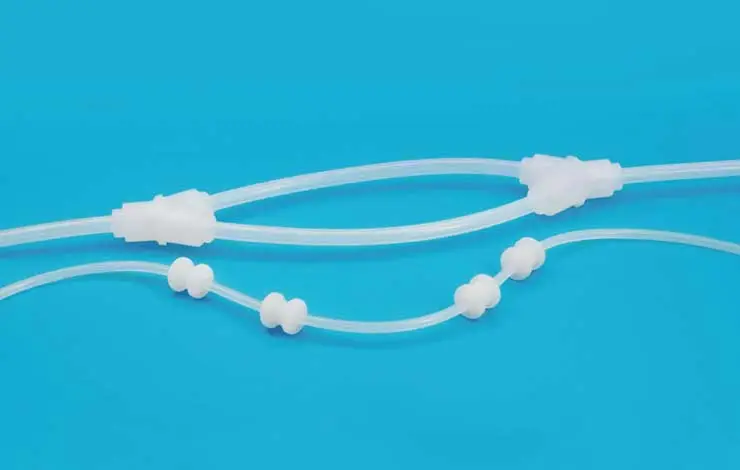
Silicone tubing (usually referring to silicone rubber tubing) is an extremely important and widely used high-performance elastic tubing. Below, I will provide a detailed analysis from three aspects: characteristics, common types, and application scenarios.
I. Core Characteristics
The superior performance of silicone tubing stems from its molecular structure, where the main chain is composed of silicon-oxygen bonds, and the side chains are organic groups (usually methyl groups).
1. Excellent Temperature Resistance:
Wide operating temperature range: Typically between -60℃ and +200℃; specially formulated silicone tubing can withstand temperatures up to 300℃ for short periods.
Stability: Within this range, its physical properties (such as flexibility and elasticity) change very little; it will not become brittle or melt like plastic tubing.
2. Excellent Chemical Inertness and Biocompatibility:
Chemical Stability: It has good resistance to most aqueous solutions, dilute acids, dilute alkalis, alcohols, and oils. However, it is not resistant to strong acids, strong alkalis, concentrated sulfuric acid, and some hydrocarbons and solvents (such as benzene and gasoline).
3. Physiological Inertness: Meets medical-grade (e.g., USP Class VI) or food-grade (e.g., FDA 21 CFR 177.2600) standards; tasteless, odorless, non-toxic, and does not breed bacteria, making it an ideal material for contact with humans and food.
4. Excellent Flexibility and Elasticity:
Remains soft even at extremely low temperatures, is not easily permanently deformed, has good resilience, and strong anti-kinking ability.
5. Good Electrical Insulation:
Silicone rubber is an excellent insulating material, resistant to electric arc and corona discharge, suitable for various electrical protection applications.
6. Transparency and Customizability:
Can be made into completely transparent tubing for easy observation of fluid conditions.
Easy to color; various colors can be created by adding masterbatch for identification and classification.
7. Easy to Clean and Aging Resistant:
Smooth surface, does not easily adhere to substances, easy to clean and disinfect (can be autoclaved).
Resistant to ozone, ultraviolet rays, and radiation; long service life under natural conditions.
7. Gas Permeability:
Silicone rubber exhibits selective permeability to gases (such as oxygen and carbon dioxide), a property crucial in specific applications (e.g., medical membrane oxygenators).
Main Limitations:
Lower Mechanical Strength: Compared to materials like polyurethane and nylon, its tensile strength, abrasion resistance, and tear resistance are inferior.
Limited Oil and Solvent Resistance: Unsuitable for environments with fuels or hydrocarbon solvents.
Higher Cost: More expensive than common PVC and rubber tubing.
II. Common Types
Based on manufacturing process and structure, it is mainly divided into:
1. Extruded Silicone Tubing: The most common type, formed by extrusion through a mold. According to application, it can be divided into:
General Industrial Silicone Tubing
Food-Grade Silicone Tubing: Meets relevant food safety standards.
Medical-Grade Silicone Tubing: Strictly certified for use in medical devices and pharmaceuticals.
Peristaltic Pump Silicone Tubing: High elasticity, low compression deformation, and fatigue resistance.
1. **Fuel-phase Silicone Tubing:** Made from high-purity vapor-phase silicone, it boasts extremely high transparency and is suitable for highly demanding applications.
2. **Platinum-cured Silicone Tubing:** Utilizes a platinum catalyst instead of traditional peroxide curing. It is odorless, odorless, and extremely pure, making it ideal for high-purity biopharmaceuticals, laboratories, high-end food contact applications, and sensitive electronic applications.
3. **Reinforced Silicone Tubing:**
**Clad Silicone Tubing:** The inner or outer layer is silicone, with braided or wound polyester filaments, aramid fibers, etc., significantly improving pressure resistance and burst strength while maintaining the chemical inertness of the inner/outer layers.
**Steel Wire Reinforced Silicone Tubing:** Embedded with spiral steel wire to prevent negative pressure collapse and maintain tubing patency.
III. Main Application Scenarios
Its characteristics directly determine its wide range of applications:
1. Medical and Life Sciences Field
Medical Devices: Infusion tubing, drainage tubing, breathing tubing, anesthesia machine tubing, hemodialysis tubing, endoscopic accessories, etc.
Pharmaceuticals and Bioprocessing: Bioreactor connections, culture medium delivery, chromatography system piping, high-purity drug solution transfer (platinum-cured tubing is mandatory).
Laboratory: Pipettes, peristaltic pump tubing, laboratory instrument connection tubing.
2. Food and Beverage Industry
Food Processing: Delivery of fruit juices, dairy products, alcoholic beverages, edible oils, sauces, etc.
Beverage Equipment: Fluid piping for coffee machines, beer machines, and yogurt machines.
Baking Equipment: Silicone squeeze bottles, molds, etc. (though not tubular, they are made of the same material).
3. Industrial Sector
High-Temperature Environments: Hot air ducts (e.g., welding torch ducts), oven/drying tunnel ventilation ducts, engine test bench intake and exhaust pipes.
Low-Temperature Flexibility Requirements: Fluid delivery in cold storage and low-temperature laboratories.
Electrical Insulation: Protective sheathing for wires and cables, heat shrink tubing, high-voltage equipment insulation.
Instrumentation: Connection tubing for analytical instruments, flow meters, and pressure gauges.
Special Fluid Transportation: Transporting certain chemicals, coolants, and lubricants, provided they are compatible.
4. Other Applications
Household Appliances: Internal piping for water dispensers, steam irons, and humidifiers.
Aerospace and Military: Utilizing its wide temperature range and reliability, it is used in aircraft ventilation systems, etc.
Scientific Research and Special Equipment: Customized systems requiring high cleanliness, high temperature resistance, or transparent observation.
Summary and Selection Recommendations
Silicone tubing is the preferred material for applications requiring a wide temperature range, high cleanliness, good biocompatibility, or excellent insulation.
Key Considerations During Selection:
1. Fluid Compatibility: Confirm whether the medium you are transporting is compatible with silicone.
2. Temperature and Pressure: Determine the operating temperature and pressure range. For high-pressure environments, reinforced tubing is required.
3. Certification Requirements: Medical applications require USP Class VI, food applications require FDA, and high-purity biopharmaceutical applications require platinum vulcanization.
4. Size and Hardness: Select the inner diameter based on flow rate and the hardness (Shore A) based on installation bending requirements.
5. Cost Budget: Balance performance and cost while meeting core requirements.
By matching the above characteristics with specific needs, the irreplaceable role of silicone tubing in many high-end and demanding applications can be fully realized.
Silicone tubing (usually referring to silicone rubber tubing) is an extremely important and widely used high-performance elastic tubing. Below, I will provide a detailed analysis from three aspects: characteristics, common types, and application scenarios.
I. Core Characteristics
The superior performance of silicone tubing stems from its molecular structure, where the main chain is composed of silicon-oxygen bonds, and the side chains are organic groups (usually methyl groups).
1. Excellent Temperature Resistance:
Wide operating temperature range: Typically between -60℃ and +200℃; specially formulated silicone tubing can withstand temperatures up to 300℃ for short periods.
Stability: Within this range, its physical properties (such as flexibility and elasticity) change very little; it will not become brittle or melt like plastic tubing.
2. Excellent Chemical Inertness and Biocompatibility:
Chemical Stability: It has good resistance to most aqueous solutions, dilute acids, dilute alkalis, alcohols, and oils. However, it is not resistant to strong acids, strong alkalis, concentrated sulfuric acid, and some hydrocarbons and solvents (such as benzene and gasoline).
3. Physiological Inertness: Meets medical-grade (e.g., USP Class VI) or food-grade (e.g., FDA 21 CFR 177.2600) standards; tasteless, odorless, non-toxic, and does not breed bacteria, making it an ideal material for contact with humans and food.
4. Excellent Flexibility and Elasticity:
Remains soft even at extremely low temperatures, is not easily permanently deformed, has good resilience, and strong anti-kinking ability.
5. Good Electrical Insulation:
Silicone rubber is an excellent insulating material, resistant to electric arc and corona discharge, suitable for various electrical protection applications.
6. Transparency and Customizability:
Can be made into completely transparent tubing for easy observation of fluid conditions.
Easy to color; various colors can be created by adding masterbatch for identification and classification.
7. Easy to Clean and Aging Resistant:
Smooth surface, does not easily adhere to substances, easy to clean and disinfect (can be autoclaved).
Resistant to ozone, ultraviolet rays, and radiation; long service life under natural conditions.
7. Gas Permeability:
Silicone rubber exhibits selective permeability to gases (such as oxygen and carbon dioxide), a property crucial in specific applications (e.g., medical membrane oxygenators).
Main Limitations:
Lower Mechanical Strength: Compared to materials like polyurethane and nylon, its tensile strength, abrasion resistance, and tear resistance are inferior.
Limited Oil and Solvent Resistance: Unsuitable for environments with fuels or hydrocarbon solvents.
Higher Cost: More expensive than common PVC and rubber tubing.
II. Common Types
Based on manufacturing process and structure, it is mainly divided into:
1. Extruded Silicone Tubing: The most common type, formed by extrusion through a mold. According to application, it can be divided into:
General Industrial Silicone Tubing
Food-Grade Silicone Tubing: Meets relevant food safety standards.
Medical-Grade Silicone Tubing: Strictly certified for use in medical devices and pharmaceuticals.
Peristaltic Pump Silicone Tubing: High elasticity, low compression deformation, and fatigue resistance.
1. **Fuel-phase Silicone Tubing:** Made from high-purity vapor-phase silicone, it boasts extremely high transparency and is suitable for highly demanding applications.
2. **Platinum-cured Silicone Tubing:** Utilizes a platinum catalyst instead of traditional peroxide curing. It is odorless, odorless, and extremely pure, making it ideal for high-purity biopharmaceuticals, laboratories, high-end food contact applications, and sensitive electronic applications.
3. **Reinforced Silicone Tubing:**
**Clad Silicone Tubing:** The inner or outer layer is silicone, with braided or wound polyester filaments, aramid fibers, etc., significantly improving pressure resistance and burst strength while maintaining the chemical inertness of the inner/outer layers.
**Steel Wire Reinforced Silicone Tubing:** Embedded with spiral steel wire to prevent negative pressure collapse and maintain tubing patency.
III. Main Application Scenarios
Its characteristics directly determine its wide range of applications:
1. Medical and Life Sciences Field
Medical Devices: Infusion tubing, drainage tubing, breathing tubing, anesthesia machine tubing, hemodialysis tubing, endoscopic accessories, etc.
Pharmaceuticals and Bioprocessing: Bioreactor connections, culture medium delivery, chromatography system piping, high-purity drug solution transfer (platinum-cured tubing is mandatory).
Laboratory: Pipettes, peristaltic pump tubing, laboratory instrument connection tubing.
2. Food and Beverage Industry
Food Processing: Delivery of fruit juices, dairy products, alcoholic beverages, edible oils, sauces, etc.
Beverage Equipment: Fluid piping for coffee machines, beer machines, and yogurt machines.
Baking Equipment: Silicone squeeze bottles, molds, etc. (though not tubular, they are made of the same material).
3. Industrial Sector
High-Temperature Environments: Hot air ducts (e.g., welding torch ducts), oven/drying tunnel ventilation ducts, engine test bench intake and exhaust pipes.
Low-Temperature Flexibility Requirements: Fluid delivery in cold storage and low-temperature laboratories.
Electrical Insulation: Protective sheathing for wires and cables, heat shrink tubing, high-voltage equipment insulation.
Instrumentation: Connection tubing for analytical instruments, flow meters, and pressure gauges.
Special Fluid Transportation: Transporting certain chemicals, coolants, and lubricants, provided they are compatible.
4. Other Applications
Household Appliances: Internal piping for water dispensers, steam irons, and humidifiers.
Aerospace and Military: Utilizing its wide temperature range and reliability, it is used in aircraft ventilation systems, etc.
Scientific Research and Special Equipment: Customized systems requiring high cleanliness, high temperature resistance, or transparent observation.
Summary and Selection Recommendations
Silicone tubing is the preferred material for applications requiring a wide temperature range, high cleanliness, good biocompatibility, or excellent insulation.
Key Considerations During Selection:
1. Fluid Compatibility: Confirm whether the medium you are transporting is compatible with silicone.
2. Temperature and Pressure: Determine the operating temperature and pressure range. For high-pressure environments, reinforced tubing is required.
3. Certification Requirements: Medical applications require USP Class VI, food applications require FDA, and high-purity biopharmaceutical applications require platinum vulcanization.
4. Size and Hardness: Select the inner diameter based on flow rate and the hardness (Shore A) based on installation bending requirements.
5. Cost Budget: Balance performance and cost while meeting core requirements.
By matching the above characteristics with specific needs, the irreplaceable role of silicone tubing in many high-end and demanding applications can be fully realized.